Showing posts with label cabling London. Show all posts

Wednesday, August 31, 2022

Is Cat6 Cable Better Than Cat5e?

 Should Cat6 Cabling Replace Cat5e?

Computer networks are an essential part of modern life, but for a network to be effective it needs to transfer data at high speeds. Achieving this is made possible with data cables. However, you need to have the correct cables in place. The traditional data cabling used was Cat 5, along with its enhanced successor Cat 5e. However, Cat 6 cabling has also been available for some time and represents one of the most popular and efficient data cabling solutions.

What is Cat6?

Cat 6 cabling uses four pairs of twisted copper cables and is specifically designed to be used in computer networks that utilize ethernet technology. Capable of operating at bandwidths reaching 250MHz, it’s also capable of transmitting data at high speeds. At distances of up to 100m, Cat 6 cables can move data at speeds of 1 Gbps. However, if this distance is lowered to 55m, a Cat 6 cable can increase this speed to 10 Gbps. Cat 6 cabling is also highly resistant to electrical interference, and this ensures data cabling Westminster quality is less likely to be compromised.

What Are the Benefits of Cat6?

If you are considering whether Cat 6 cabling should replace Cat5e it’s essential you understand all of its benefits:

Backward compatible: Cat 6 cabling was created as the successor to Cat 5 cabling and was designed to be backward compatible. Therefore, if your existing computer network is running on a Cat 5e-based infrastructure, it’s much easier to implement Cat 6 cabling gradually. This will not only reduce network downtime during installation but also allow you to invest in new cabling over a longer period.

Higher quality cables: the construction of Cat 6 cables means they are more tightly wound than Cat 5 cables, as well as feature thicker sheaths and cable conductors. These benefits combine to produce a cable that is both physically stronger and more efficient in terms of electrical performance.

Enhanced network performance: making the step up to Cat 6 IT cabling canary wharf will provide your computer network with a significant boost in performance. Files can be sent and received much quicker, so you will become more productive and competitive.

What are the categories of cable?

As well as Cat 6 cables, there are a number of options available for your network needs:

Cat 5: this type of cable also uses twisted pair copper cables but is unshielded. With a top performance rated at 100Mhz and distances of 100m covered, Cat 5 cables transmit data at speeds of up to 100MBps. An enhanced version, known as Cat 5e, is also available and can transfer data at a speed of 1Gbps.

Fiber optic: using glass fibers that carry light signals, fiber optic cables can send data over distances of 10km with speeds that can vary from 10Gbps to 100Gbps. The most modern data cable solution, fiber optic is also the most expensive option.

Cat 5e or Cat 6?

If you find your existing cables are failing and you need to replace Cat5e to keep pace with the demands of your network, then it’s likely that upgrading to Cat 6 cables will provide the speed and efficiency you need. If, however, your Cat 5e network allows you to remain productive, then an upgrade to Cat 6 cabling will represent an unnecessary investment.

Original Source: Is Cat6 Cable Better Than Cat5e?

Monday, August 1, 2022

What Is A Data Cable?


What is a data cable?

A data cable is a cable that connects two devices for the purpose of transferring data. Data cables can be broken down into three main types.

1. Twisted pair cabling.

2. Coaxial cabling.

3. Fibre optic cabling.

In this blog post, we will discuss what each type of data cable is and where they are used most often by breaking them down into these categories.

How to Choose the Right Category of Data Cable

There are a few things you should keep in mind when choosing the right category of data cable:

1. The type and quality of cabling are determined by its performance characteristics, such as speed or power.

2. Data cables must be selected based on their intended use. For example, network cables can vary depending on how many applications will run over them at one time. You may also need to consider distance limitations.

3. The most common choice is Copper Category Cables which are made up of twisted pair wires covered by an outer sheath (shield). Twisted pair wire conductors consist of two uninsulated copper wires wrapped around each to minimize interference. In addition, 4 pairs are contained in a single cable.

4. the higher the category number (CAT), the greater the speed and distance performances of the cable. For instance, a Cat 7 cable is faster and can support longer distances than a Cat 6 cable.

Twisted Pair Cabling

Twisted pair cabling is the most common type of data cable which you can get from IT Cabling London and is made up of two insulated copper wires that are twisted together. This type of cabling is used in a variety of applications such as home networks, office networks, and even audio/video applications. The most common types of twisted pair cabling are Cat cables.

1. Cat5e Cabling.

2. Cat6 Cabling.

3. Cat6a Cabling.

4. Cat7 Cabling.

5. Cat8 Cabling.

Cat-cable or Category cable is the most commonly used and versatile type of copper cabling which has been proven to be extremely reliable. This category was first introduced as Cat5 in 1995 by the Electronic Industries Alliance (EIA). The standard for Cat cables is regularly updated, but their name always remains consistent. The category is usually ratified to the performance the cable is capable of over a set distance of 90 metres of a permanent link.

Shielded Twisted Pair Cables

Twisted pair cables are also available with special shielding, which can help minimize interference from other devices such as microwaves and cell phones. These types of shielded cables are referred to as STP (shielded twisted pair) category cables.

Shielded data cables are typically used in situations where the cabling needs additional protection from EMI (Electrical Magnetic Interference) and RFI (Radio frequency interference).

This type of cabling is often used in industrial or medical settings where there is a greater risk of noise and interference. Shielded cables have a metal foil or braid shield around the conductors to help reduce unwanted signals.

Coaxial Cabling

Coaxial cabling consists of one copper wire that surrounds another insulated copper wire. This type of data cable is used mainly in video applications such as CCTV, security systems, and satellite TV installations. Coaxial cabling has a higher bandwidth capacity than twisted pair cabling.

Coaxial cabling is a type of data cable that uses an inner conductor surrounded by an insulating layer, covered by a braided shield, and finally covered by an outer sheath. This type of cabling is used in home cable services and business networks.

Categories for coax cables are divided into two:

1. - Foam Polyethylene Insulation (Foamed-PE).

2. - High-Density Polyethylene Insulation (HDPE).

Uses for Coaxial cabling include

Data Centres, telephone and cable TV systems, and large-scale mobile phone booster installations.

Fibre Optic Cabling

Data cables can also be made up of fibre optic cabling. This type of data cable is a glass or plastic core with an insulating layer surrounded by ultraviolet light transmitting fibres that are covered in protective materials.

Optical fibre cables work largely the same way that normal twisted pair cables do except for one key difference. Instead of sending electrical signals down the wire they send light pulses through an optical glass tube, otherwise known as an optical core. These signals can travel tens of thousands of kilometres.

The main advantage to using fibre optic cables over copper is higher bandwidths which allow for large amounts of data transfer at high speeds without the need for repeaters. This is because they have multi-gigabit capacities. These signals don't degrade as much over long distances. There are fewer distance limitations on fibre optics compared to copper data cables.

Common uses of data cables 

Now that we have discussed what each type of data cable is, let's take a look at where they are used most commonly.

Twisted pair cabling is by far the most popular type of data cable from IT Cabling Canary Wharf. It can be found in a variety of applications such as home networks, office networks and even audio/video applications. Coaxial cabling is mainly used for video applications. It can be found in products such as televisions and video players. Fibre optic cabling is the most advanced type of data cable. It is often used in high-speed applications such as networking, telecoms and datacentres.

Is Ethernet and data cable the same?

No. Ethernet and Data cabling is not the same thing, although they are closely related to each other in terms of function.

Ethernet was developed as a method for connecting different types of devices together on a network such as computers, printers, routers, etc... However data cables were designed to connect these various Ethernet devices together. This is achieved by sending electrical signals down the wire at high speeds that allow it to send information quickly between them (e.g 1000Mbps).

Original Source: What Is A Data Cable?

Saturday, July 2, 2022

What is a Data Cabinet

 A data cabinet is a piece of equipment that is used to store, organise and protect network equipment. Data cabinets are often referred to as racks, network cabinets, or cab's. Cabinets are usually made of metal, plastic, or glass. In addition, the cabinets will have multiple shelves. Each shelf will be used for various equipment such as routers, switches, and modems. Furthermore, data cabinets can also include features such as cooling fans and cable management systems. Data cabinets help to keep data organized and protected. They can also help to improve the efficiency of data retrieval.

Data cabinets come in different shapes and sizes. The size of the cabinet will be determined by the size of your IT cabling canary wharf infrastructure and IT equipment. There are a number of options available when it comes to finding the correct cabinet for your needs.


What are the different types of cabinets? 

As previously stated, data cabinets are often referred to as racks, network cabinets, or cabs. Commonly when an individual uses one of these phrases they're referring to the same thing. However, technically there is a difference. A cabinet is a unit that is closed on all sides, including the top & bottom. Racks do not have sidewalls, they're open. Commonly, they're referred to as open frame racks.

Different types of racks/cabinets 

1. Comms Cabinet

2. Equipment Cabinet

3. Server Cabinet

4. Wall Cabinet

5. CoLo Cabinet

6. Open Frame Rack 

Data Cabinet Airflow 

When allocating the space for your cabinet, the prevention of fire is of the utmost importance. The cooling strategy of your comms rooms plays a crucial part in protecting your premises from a fire. Additionally, the damage caused by heat is not always evident and catastrophic as a fire or meltdown. A well-designed cooling system will help to increase the lifespan of your equipment, preventing issues such as unexpected node crashes or system failures.

The biggest mistake is not factoring in the cooling when designing this space. Most network cabinets are 42U high, which is 7 feet tall. Depending on the equipment being used, it could be generating a lot of heat. The standard rule of thumb is 1U for every 10-15 watts of power being used. If you have a 42U cabinet, and it’s full of equipment that uses 1,000 watts, you could be looking at a heat load of approximately 68,000 BTUs. That is a lot of heat!

There are a few different options for cooling data cabinets: 

Air conditioning: This is the most common method of cooling data cabinets in data cabling Watford. The air conditioner will remove the heat from the air and circulate it back into the room. An open frame cabinet will be suitable for this environment, the open sides will prevent your equipment from overheating. To ensure that your equipment is operating within the recommended temperature range you must monitor the room temperature. The simplest way to do this would be a room thermometer that is checked regularly. 

Air cooled: This type of cooling system uses fans to circulate the air around the equipment and exhaust the hot air out of the cabinet. Furthermore, for the best cooling solution, all exhaust fans in your comms room must be installed facing the same direction. As a result, it allows the air to flow in the same direction. Lastly, having exhaust fans at the top or back of your cabinet will aid in removing the warm air faster.

Liquid-cooled: This system uses a coolant to remove the heat from the equipment and circulate it back into the room. A water-cooled system circulates water through a network of tubing to remove heat from components. The water is then cooled using a radiator, much like the one in your car, and circulated back through the system. 

How to choose a data cabinet? 

When choosing a data cabinet, it is important to consider the following: 

  1. The capacity of the cabinet (how many shelves and how much data it can hold)
  2. Security of the cabinet (how well it protects data from unauthorized access)
  3. Accessibility of the cabinet (how easy it is to retrieve data from the cabinet)
  4. The durability of the cabinet (how well it withstands wear and tear)
  5. The price of the cabinet

Original Source: What is a Data Cabinet

Tuesday, May 3, 2022

Pre-Terminated Data Cabling

 A reliable and fast data cabling solution is crucial to maintaining your business productivity. Businesses such as data centres, storage area networks, and server farms can not afford the large amount of downtime or disruptions that come with unterminated data cabling. As a solution, these companies will benefit from a pre-terminated data cabling Watford solution. A pre-terminated solution can be defined as a ‘plug and play system. This solution will eliminate the need for onsite termination and testing. Furthermore, its an evolution from the traditional installation method. With a pre-terminated solution, the system will arrive on-site pre-tested and labelled.


Benefits of Pre-terminated data cabling

  1. Reduce installation cost and time by up to 50%. This includes Cat5e, Cat6, Cat6a, single-mode and multi-mode
  2. To future-proof your business, you must invest in a structured cabling system that meets the demands of your business operations. In addition, the system must allow for future growth. However, the performance of your system is not the only factor to be taken into consideration. The majority of mission-critical installations are carried out ‘out of hours' to decrease network downtime and disruption to your business activities. NM Cabling’s installation team can offer a pre-terminated solution to reduce business interruption.
  3. Pre-terminated data cabling is very beneficial when time on site is at an absolute premium. For instance, in a new build such as data centres.
  4. Live sites that require additional cabling, but the cost and implication of downtime can be detrimental can benefit from pre-terminated data cabling Westminster. For example, trading floors or call centres. These types of premises may wish to have their cabling completed in a single overnight operation.
  5.  NM Cabling’s pre-terminated cables bring to the market end to end manufacturer tested and guaranteed cabling products that adhere to the latest IEEE 802.3 specifications, facilitating the deployment and maintenance of 10GB ethernet capable networks.
  6. Our Latest pre-connected cabling solution allows for a faster, more reliable and risk-averse method of installation. Avoiding downtime and business interruption is critical when bringing new client revenue streams. This solution is very beneficial.

Further Benefits of Pre-terminated Data Cabling 

  1. A Pre-terminated solution means no risk of potential on-site termination problems.
  2. Reduce human resource requirement
  3. Quality terminations, fully labelled, tested and provided with test documents.
  4. Reduce disruption for your clients.
  5. Maintain your security with fewer personnel on-site.
  6. Increase productivity.
  7. Simplified project management.
  8. Increased deployment speed.
  9. Easier material management on site.
  10. Requires minimum on-site storage

Original Source: Pre-Terminated Data Cabling

Tuesday, November 2, 2021

What is Single Pair Ethernet (SPE)

 In May 1973 while working at Xerox PARC, Bob Metcalf introduced the concept of ethernet. Following this, IEEE turned the Ethernet concept into a global standard in 1983 with the release of IEEE Std. 802.3a, this supported 10Mb of data transmission over a coaxial cable. The advancement of Ethernet took another progressive step in 1990 by developing IEE Std. 802. 3i, this was built to support the 10BASE-T application, providing 10Mb of data transmission over the twisted-pair network cabling London.


Since then, the evolution of ethernet has grown rapidly. Quickly moving on from coaxial to twisted-pair copper cabling. This change saw an increase in transmission speeds and reduced costs. To begin with, only two twisted pairs were used, but this soon evolved to four pairs to achieve higher data rates. Now Ethernet is one of the most commonly used protocols for transmitting data between electronic devices. So, what is a single pair ethernet (SPE)? 

What is SPE?

Traditional ethernet cables from the LAN sector or Industrial Ethernet cables use two or four pairs of wires depending on the transmission rate.

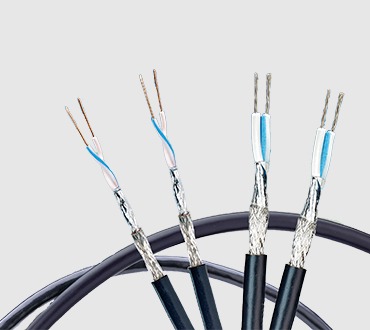
Single pair Ethernet cables only contain one twisted pair (single pair). Single twisted-pair cabling was first used in the 1870s, instead of having two straight wires next to each other, the conductors were twisted together to improve the electrical performance. The twisting of the conductors resulted in the cancellation of unwanted electrical noise from nearby pairs or other sources. In the 1870s, single twisted pair cabling was used to interconnect telephones.

Centuries later, the single twisted pair cabling is still in use. The use of this cable is now commonly found in building automation, industrial, and automotive applications. SPE offers additional advantages in comparison to the traditional cable. 

For example

1. Thinner bending radii 

2. Smaller cables. Saves material and costs. Great for weight and space-saving designs.

3. Transmission rates of up to 1Gbit on a single pair

4. SPE cable design enables much faster /easier installation, reducing errors in assembly

5. Single Pair Ethernet uses PoDL to supply terminal devices with up to 50W via the data line.

6. Lower caloric load, less smoke development 

SPE Power delivery

To enhance its usefulness, IEEE developed the ability to transmit power and data over the same twisted pair. Power transmission over 4-pair Ethernet cabling is commonly called Power over Ethernet (PoE). Power transmission for SPE IT cabling London is referred to as Power over Data Lines (PoDL). This standard specifies multiple classes of powered devices delivering between 0.5 and 52 watts of power. It’s important to realize, although PoDL technology is not compatible with the existing 2 and 4 pair POE equipment. It has the same advantages as PoE as it provides for centralized power control and backup power.

SPE Cables

Single Pair Ethernet cables are built to support a maximum frequency that corresponds with one or more IEEE applications. Additionally, there are also separate standards for patch cables and horizontal cables. Although it's possible to manufacture patch cords from horizontal cables, patch cables generally employ stranded conductors instead of solid ones. Thus, offering increased flexibility at the expense of diminished electrical performance over long lengths. 

SPE connectors

The interfaces discussed in the IEC 63171 standards for connector types 1-6 are open-sourced, allowing any manufacturer to make connectors with the interfaces. As a result, this will increase the likelihood of broad industry adoption. Manufacturers maintain the common interface; however, they have innovative freedom. They can implement proprietary features in other areas of the connector design. 

Original Source: What is Single Pair Ethernet (SPE) 

Tuesday, October 5, 2021

What is Data Cabling Used For?


What is Data Cabling?

Data cables are a crucial part of any IT infrastructure. Without data cables, you would be unable to transmit data between two points e.g. from a server to an individual PC. Accordingly, you need the right data cables for your specific needs to remain productive. But the world of data cables can be complex. There are many different categories available and understanding which one is best for you can be difficult. Getting to grips with data cables is important, so let’s look at how you can make the right choice. 


What Types of Data Cables Are There? 

There are three main types of data cables available: 

Twisted Pair: These data cables use a pair of twisted copper cores and are mostly found in telecommunications. The purpose of this twisted construction is to minimize any degradation to the signal. One of the twisted cores is used to transmit information while the other acts as a grounding wire. Typically, a Cat 6 cable – which uses the twisted pair design – can carry data over 100m without any signal degradation.

· Coaxial: Most commonly seen in older IT infrastructures, coaxial cables have high bandwidths and are capable of carrying high-frequency signals. These cables use a solid wire at their center as a conductor – which is within an insulator – and then an outer conductor is used to create a functioning circuit. This type of cable is popular in digital telephone networks due to the amount of data they can carry. 

Fibre Optic: One of the newer forms of data cabling, fibre optic cabling has brought revolutionary technology to network cabling London. Fibre optic cables use beams of light to transmit data and consist of an inner core and outer cladding. The cables are lightweight and capable of transmitting data over distances of up to 10km and at maximum speeds of 10 gigabits per second. Fibre optic cables are most used within telecommunications, cable TV, and local area networks.

A commonly asked question is whether ethernet cables are the same as data cables. The answer to this comes down to terminology. The term ethernet refers to a local area network rather than a specific cable. Any data cable used within such a network can technically be referred to as an ethernet cable. 

Data Cabling Installation

One of the best methods to adopt when it comes to data cabling is the structured cabling approach. This method uses patch panels and trunks to build an infrastructure whereby subsystems can be set up to support multiple hardware uses. Most importantly, structured cabling is scalable and makes future expansion much easier. These cabling systems can integrate twisted pair, coaxial, and fibre optic – although these different categories cannot directly connect with each other – and make it a versatile option.

The installation of data cabling Watford, whether it is structured or the more traditional point-to-point method, is a complex undertaking. Rather than taking this on yourself, it pays to bring in the services of a professional. Not only will they be able to deliver an installation that operates to a high standard, but the stress that they save you will be invaluable. 

Original Source: What is Data Cabling Used For? 

Thursday, September 2, 2021

What is Fibre Optic Cabling

 Fibre optic cabling systems are crucial for the success of your business. In a fast-paced world where anything below par can hinder your success and competitiveness. Fibre optic cabling can provide you with the instant transmission of information you need to keep your business functions above par. After all, communication is crucial when it comes to operating a business. Fibre optic cables have become the go-to choice of cabling as they hold a number of advantages over copper cables. For example, they have higher bandwidth and transmit speed. These cables are commonly used in telecommunication services such as the internet, telephones, and television.

How does fibre optic cabling work?

Optical fibre cables are made up of thousands of fibre strands that are as thin as human hair. The fibre transmits information in the form of light particles or photons. The photons can be transmitted over large distances of 100km+, this alone makes fibre optic network cabling London perfect for communication systems.

When light signals are passed through the cable, they reflect off the core and cladding in zig-zag bounces, this process is known as total internal reflection. Unfortunately, the light signals do not travel at the speed of light due to the density of the glass layers. However, the light signals travel 30% slower than the speed of light. In spite of this, fibre is still a lot faster than traditional copper. To boost the signal through its journey, a switch may be placed at distant intervals to regenerate the optical signal by transforming it to an electrical signal, processing that electrical signal and retransmitting the optical signal. 

What are the two types of fibre optic cables? 

Single-mode

Singlemode fibre is used for long distances because of the smaller diameter of the glass fibre core. This reduces the possibility of losing signal strength. Due to the thin core, the light signals can travel directly through the core without the risk of bouncing off the internal sides of the fibre optic cable. This reduces the amount of light reflection created during the transmission. 

Multimode

Multimode fibre cables are noticeably larger in comparison to single-mode, they can be 10x larger than a single mode in diameter. One of the main benefits of multimode is the greater light-gathering capacity. This allows light to travel along with a variety of different paths within the cable. Multimode fibre can only transmit signals over short distances, these cables are perfect for connecting internal computer networks.

What is fibre to the desk?

Also known as FTTD, Fibre to the desk is a cable solution of using fibre-optic cables to connect workstations to the company’s network instead of the traditional copper cable. The traditional method is also known as fibre to the office, this method involves local conversion from fibre to copper data cabling Watford connecting the user. FTTD installation costs are higher than the traditional method the advantages of futureproofing and security make up for the expenses.

How to test fibre optic?

Much like all forms of technology, fibre optic cables are also prone to wear and tear, as well as failures. Testing your fibre optic cable is essential If you wish to maintain the advantages. The best way to maintain your cables is through OTDR (Optical Time Domain Reflectometer). The OTDR has the ability to compose a comprehensive picture and analysis, providing you with a clear picture of the cable’s health status. OTDR can be used to analyse splice loss, fault finding and accurately measure lengths. Lastly, it can also read the performance of the cable and structural problems, enabling you to identify and rectify any faults. 

Original Source: What is Fibre Optic Cabling 

Tuesday, August 3, 2021

Latest CCTV Technology


Understanding New CCTV Technology 

Safety and security solutions continue to evolve and, at the centre of this evolution, is CCTV technology. Present in our society for over 30 years now, CCTV remains a crucial tool when it comes to fighting crime and keeping people safe. But, as with all technology, the capabilities of CCTV have moved on considerably since it was first launched. And that’s why it’s important to understand new CCTV technology and the rules associated with it.


Which CCTV Camera is Best for an Office?

A wide range of options are available when it comes to choosing a CCTV camera for an office; the best ones to look at are:

Wireless: These cameras benefit from wireless technology and ensure that your cameras remain discreet and don’t impact the aesthetics of your office. Best of all, wireless CCTV cameras can be repositioned with minimal fuss and disruption. 

Pan/Tilt/Zoom: Offices can be large and, therefore, difficult to monitor. But a Pan/Tilt/Zoom camera gives you the freedom to rotate the view in order to investigate all activity. This allows you to keep an eye on large spaces with just one camera.

Domed: A major benefit of a domed camera is that they provide a discreet solution to your monitoring needs. With a camera housed within a dome, a domed camera minimises the intrusive effect of a ceiling-mounted camera.

When it comes to the form in which these technologies take, there are generally two options: analogue and digital. Analogue solutions tend to be more cost-effective and their network cabling London allows cameras to be set up over long distances. Digital solutions, meanwhile, provide high-quality video and continuous recording. And the footage captured, by both analogue and digital solutions, can easily be recorded directly to external hard drives. This is much more convenient than traditional videotape solutions and allows multiple backups to be created quickly.

What is the best position for CCTV?

The best place to install CCTV cameras in an office is dependent on the type of camera being used. Cameras that are unable to tilt or pan, for example, are best placed in corners of the office in order to cover a wide area. If your cameras do have the option to tilt or pan then it makes sense to position them in the centre of the office where they can maximise their coverage. Additionally, it’s important that cameras are positioned so that they can easily monitor any entry or exit points. 

What are the rules about CCTV cameras?

It’s vital that you use CCTV in a manner that is legal and respects the privacy of your staff. So, if you are installing CCTV in your office, make sure you abide by the following rules:

Inform Staff: It is illegal to install CCTV cameras without telling your staff. Make sure that this is communicated before installation and that it is referenced in any staff contracts

Follow Data Protection Laws: The recordings of your staff count as personal data, so they need to be treated correctly. In order for this data cabling Watford to remain secure, it’s essential that access to any CCTV recordings is limited to a select few. Naturally, strong password protection should also be applied to any external hard drives and recordings. 

Do Not Keep Footage Indefinitely: It’s not necessary to keep footage for any longer than it’s useful. In general, keeping footage for between 30 – 90 days is acceptable. But, after this, it should be disposed of correctly and deleted in a manner that makes it irretrievable.

Original Source: Latest CCTV Technology