Friday, April 1, 2022

What is Cat5e Cabling?


What is Cat5e Cabling?

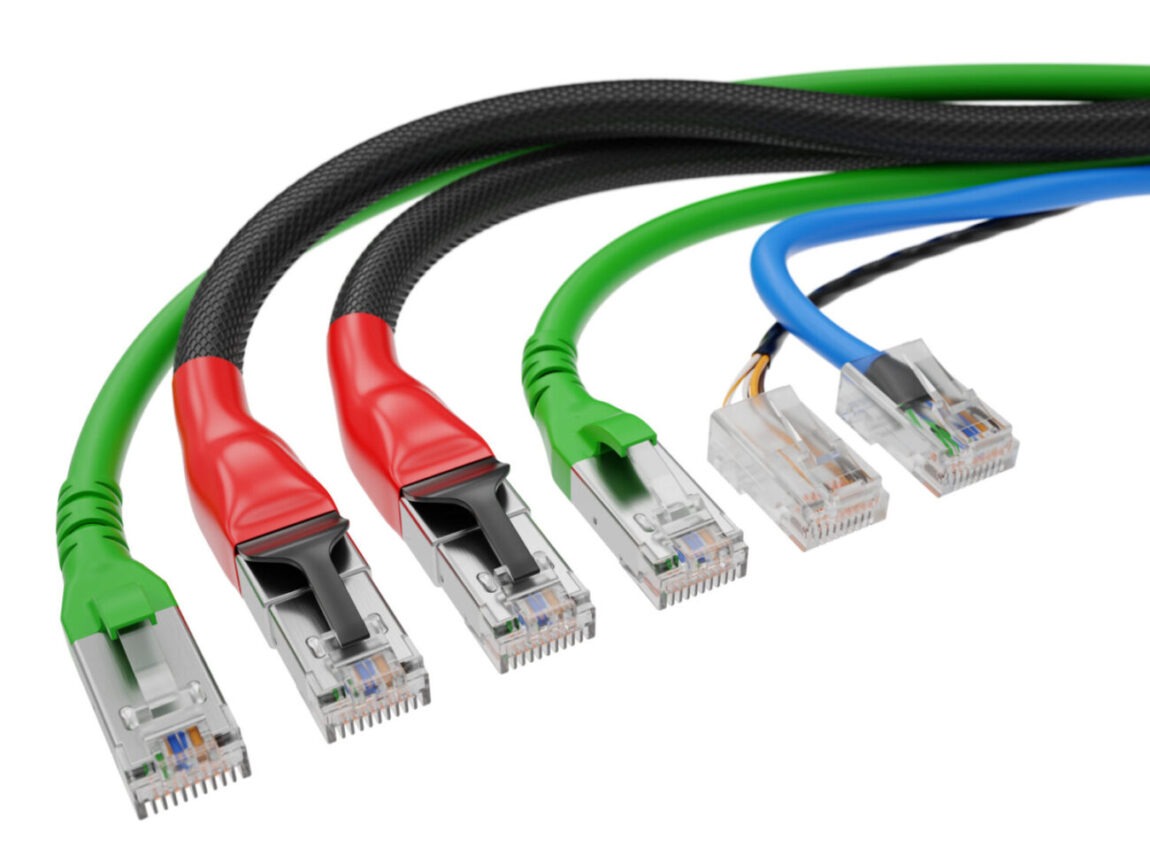
Cat 5e cable is a type of computer cabling. A cat5e cable consists of 8 strands of different colors terminated on either end with an STP or UTP RJ45 connector. Additionally, the purpose of the Cat5e cables is to carry voice and data signals between hubs, switches, routers, DSL/cable modems, and other network devices.

The most common use for a Cat 5e Cable is connecting a PC to a router or modem provided by a broadband provider. Furthermore, It may also be used for networking computers throughout a house or office building. For example, in larger buildings, it's very common for the wiring cabinets where the telephone service enters the building to have jacks installed that are to connect with each individual desk or piece of hardware via a Cat5e network cabling London between the cabinet and user.
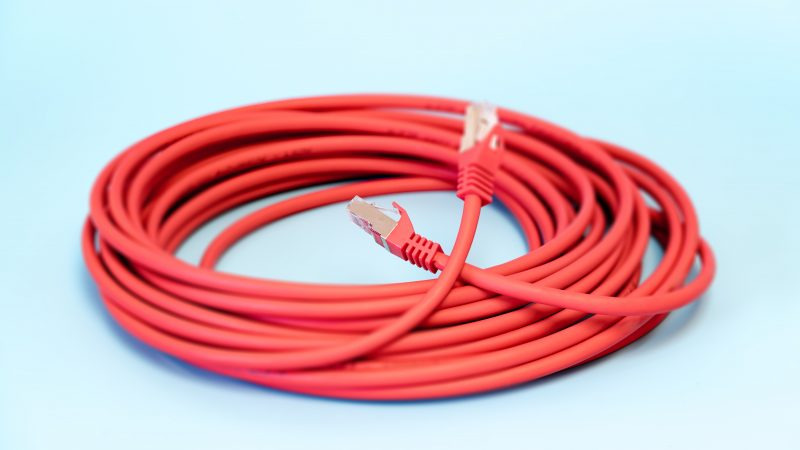

What is Cat5e Cabling Specification

Shielded Cable: U/UTP

Conductors Unshielded: 4-pair (8 wire)

Performance Characteristic Impedance 100 +/- 15 ohms @ 1 kHz

Attenuation Crosstalk 20 ps 42 AWG 82.5m @ 550 MHz 30 ps 50 AWG 82.5m @ 350 MHz

Maximum Data Rate of Category 5e, up to 1000MHz has a max data rate of 1 gigabit. In addition, the maximum speed it can handle depends on the quality of the wiring in your building. If your lines are long or there's lots of interference, don't expect it to work at top speeds.

What is Cat5e cabling used for?

The Cat5e cable is a very high-quality and economic cable that can be used in a lot of different ways. To point out, when a single cable can be used for many applications, it is referred to as "Structured Cabling".

One common use for this cable is connecting a computer, PC, or Printer to the internet. This can happen through a router, modem, or direct connection to another computer using an Ethernet cord.

In addition to networking devices, cat5e cables are also good for installing to Audio Visual systems. For instance, televisions, projectors, and speakers in surround sound systems. They can carry audiovisual signals over the data cable although modern AV generally requires a minimum of Cat6a data cabling Watford for efficient transmission.

Lastly, the lower price tag on these cables compared to other categories makes them the cabling of choice when a smaller network with budget constraints is desired.

Cat5e Pair Colours

Cat5e Cable Comes with 8 Strands; Four Pairs of Twisted Wires Inside - The most common type of network cable found today is an unshielded twisted pair (UTP), which consists of four pairs of internal wires inside a plastic sheath for protection.

For the standard color code of pair 1 and pair 2, there are eight cable colors:

Pair Number: (EIA 568B)

1. White/Orange

2. Solid Orange

3. White/Green

4. Solid Blue

5. White/Blue

6. Solid Green

7. White/Brown

8. Solid Brown

Cat5e Connector

A Category 5e cable connector is made up of eight pins, to match the above configuration. On all patch panels and modules, a color code will be present on the hardware to match the color codes of the cable to ensure matched transmission end to end.

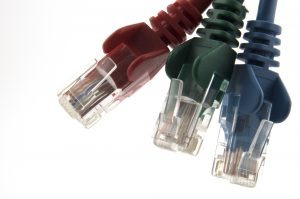
The RJ45 Cat5e Connector is the 8-pin modular jack commonly found in computer networking devices.

Maximum length of Cat5e cable

For Category 5e cable, the maximum length is 100 meters. This is generally a 90m permanent link distance and 5m patch leads at each end.

Cat5e cable is generally used for average distance runs of 40-50 metres when installed in an office or so at 1000Mbps (Gigabit Ethernet) speeds.

If longer patch leads are used at either end the overall maximum distance allowance will reduce from the 90m allowance.

STP vs UTP

Shielded Twisted Pair (STP) Cable is very similar to the above-Cat5e cable but features an additional layer of insulation around each wire. This acts as a shield against potential interference or electrical noise.

Unshielded Twisted Pair (UTP) Cables have no extra layers of insulation around the wire and may not be suitable for areas where there are large amounts of electrical equipment nearby, such as factories or industrial settings.

The next generation of cables

Cat6a vs Cat5e Cables

The next generation to the Cat5e category has already been defined. Category 6A can support speeds up to 10 Gbps over 100m runs at standard conditions. Another key point, the cables will also be backward compatible with current networks allowing them to run alongside older network types like those already running over Cat5e and standard Cat6.

Cat7 and Cat8 cabling are also growing in popularity, however, Cat6a is still the main standard in new build installations.

Original Source: What is Cat5e Cabling?

What Are The Main Data Cable Categories And What Is The Difference?

 Understanding Data Cable Categories

Telecommunications and data transfer are two of the most elements of modern business. Without the correct handling of these two aspects, it’s going to be a struggle to be competitive in the business landscape. Thankfully, you can minimize this struggle by working with the best cables for the job. But there are a lot of cables available on the market. How exactly do you know which one is best? And what are the differences between data cables and phone cables? Understanding the answers to these key questions is the only way to succeed.


What are the Main Data Cable Categories? 

Cabling comes in a variety of specifications, lengths, and even colors. Whilst the color of your cabling is far from important, it’s crucial that you understand what the main categories are and their capabilities. The most common type of cabling used in a business is data cabling Watford, and it can be found holding IT infrastructures and IP phone networks together. The most common forms of data cabling are:

Cat 5: using twisted-pair copper cables, Cat 5 cabling is unshielded and delivers a bandwidth of up to 100MHz. The distance covered by Cat 5 cables can reach up to 100m and, over this distance, data signals can be carried at speeds of between 10Mbps to 100Mbps. There is also an enhanced version of Cat 5 – known as Cat 5e – which is capable of speeds around 1Gbps.

Cat 6: a more modern take on Cat 5 cabling, Cat 6 also utilizes twisted pair cabling but at bandwidths reaching 250MHz. It should also be expected to deliver data signals at much higher speeds, up to 10Gbps over a distance of 55m – although it must be noted, that this speed will drop accordingly over long distances. Nonetheless, Cat 6 cabling also brings more stable connections thanks to the lack of interference on offer.

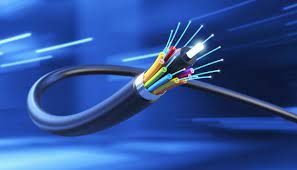
Fibre Optic Cable: these network cables use glass fibres - contained inside an insulated sleeve – to transfer data across long distances at high speed. And, by long distances, you should expect to find distances of 10km being able to handle speeds of between 10Gbps to 100Gbps. 

How do data cable and phone cable differ? 

Telephone Cable: whilst telephone cables look similar to Cat 5 and Cat 6 cables, they’re noticeably different. This difference can be identified by the end of the cable which, for phone cabling, is smaller and flatter than a Cat 5/6 cable. Telephone cables, much like data cables, can also carry data alongside sound, but the maximum speed you can expect to find is around 10 Mbps. 

Is Data Cable the Same as the Ethernet cable? 

It's also important to be able to differentiate between data cables and ethernet cables as these terms are often used interchangeably. As a rule, a data cabling Westminster cable is any cable that facilitates the transfer of data e.g. a fiber optic cable, a twisted pair cable, or a telephone cable. An ethernet cable, however, is one that is reserved for use in ethernet environments such as local area networks and wide area networks.

Choosing the Best Data Cables 

There is no ‘set solution’ when it comes to installing cabling that is correct for you and your business. Depending on your needs, the budget-friendly approach of telephone cables may be suitable for a small network. On the other hand, a large network that handles significant amounts of data would be better suited to working with fibre optics. Nonetheless, there’s a solution for every cabling project, and the right option will provide you with a boost in productivity.

Original Source: What Are The Main Data Cable Categories And What Is The Difference?

Monday, January 31, 2022

What Does a Data Centre Do?

 What is a data centre and how does it work? 

A Data Centre is a facility that houses network computers, storage systems and computing infrastructure.

We live in the age of big data, where the sheer volume of data processed on a day-to-day basis dwarfs anything that businesses have been involved with in the past. As a result, this 'big data needs to be handled correctly.

It is, after all, crucial that you can analyse all of your data, at all times. Establishing such efficient data handling will not only allow your business to remain productive but also provide an edge over your competition. And the best way to handle this data is with a data centre.


What is a Data Centre?

It's important that your IT infrastructure is equipped to handle and process your data. The demands of the modern age mean that you constantly need your data to be available. Traditional solutions, such as hard drives and physical storage mediums, simply aren't able to cope with the amount of data being processed in the 21st century. And it was this problem that led to the development of data cabling Westminster centres.

A data centre is, in its simplest form, a facility used to centralise an organisation's IT infrastructure and provide data storage. This setup typically enhances a company's ability to maintain data continuity, provide backup power support and deliver an environment that ensures IT equipment runs at its optimum efficiency. These data centres can be based onsite or remotely through a number of different options. 

What Types of Data Centres Are There? 

Every business is unique and, accordingly, has different needs when it comes to IT and data processing. Therefore, a number of different data centre models have evolved as IT has advanced. The four main types of the data centre are: 

Enterprise: one of the most common data centres, enterprise solutions are based on-site; it's a type of data centre that provides a wide range of benefits to the end-user. Performance is enhanced as the equipment is located so close to the business, scalability can easily be analysed and implemented whilst security is high as the owner can directly monitor the data centre

Colocation Facilities: these data cabling Watford solutions are provided by external businesses that rent dedicated data processing space to numerous organisations. As well as providing valuable real estate, these colocation facilities also offer 24-hour maintenance and security services to provide customers with peace of mind. Although smaller colocation facilities will only provide racks as part of their service, large facilities are able to provide entire data centre units.

Edge: not all businesses have room for a dedicated on-site data centre, but neither are they willing to compromise on performance. Therefore, edge data centres provide a fine compromise. Located close to their user base, edge data centres are classed as being at the 'edge' of customers' networks. This close proximity reduces latency and gives increased performance in an organization's data processing.

Cloud: establishing themselves as a major force in data handling, cloud data centres have risen to prominence over the last 15 years. Using the remote model, cloud data centres allow you to access your data through the internet and run your applications through a virtual infrastructure. These platforms are provided by third party providers including Microsoft Azure, IBM Cloud and Amazon Web Services.

For more information on data centres and advice on which type is right for your business, don’t hesitate to get in touch and speak to our expert team.

Original Source: What Does a Data Centre Do?

Tuesday, January 4, 2022

Electrical Installer for Technology

 Adding power to your data

Our current world is highly driven by data, we can often simply overlook the importance of electrical installation when moving or upgrading our commercial space. Furthermore, when relocating you may become so concerned with data cabling Watford that you forget to consider electrical cabling in your budget and installation plans. You must consider an electrical installer when relocating. After all, without power, data cabling will not function. 

How can an electrical installer help me? 

Improve electrical efficiency, this will lower your electrical bills

Improved designs which will increase the safety of your building

Increase protection against power outages.

Prevent power surges. This will protect the expensive technology used by your business.

How do I prepare for an electrical installation? 

Design for flexibility 

The advancement of technology has heavily influenced the ways of the work world. For instance, employees are now able to work remotely, or in a collaborative manner. Break-out rooms, meeting areas, and open-plan offices are now part of the modern-day office design. For this reason, it’s important to ensure you have electrical power sockets in multiple areas throughout your office. Lastly, you must plan to have outlets in communal meeting spaces as well as standard and hot desks. This will allow your premises to remain flexible.

Allow for extra capacity 

Technology has changed the way we work. In most cases, employees will have more than just a desktop computer on their desks. Some may have, phones, laptops, and tablets. All this equipment requires electricity to work. Therefore, we recommend a minimum of 4 electrical sockets for each desk, in some cases, you may need to increase to 6 or 8.

Floor boxes or grommets

Floor boxes are more difficult to place, it can be tricky for the engineer to cut the floor tiles close enough to the edges. In addition, a floor box placed in an open area will allow the data cabling Westminster to be kept away beneath the floor until it's being used.

Grommets can be a much more precise way to place a cable. The cables can be installed in a precise desk location and in the floor. On the other hand, with a grommet, the cables are not concealed as they are with a floorbox. Alternatively, the cables go from the floor to the desk, which doesn’t make them the most suitable solution in all cases.

Focus on special requirements

Not all electrical installations are created equal. Some office spaces might have special electrical requirements and needs. High traffics areas might require high-powered equipment to handle the electrical needs. Rooms such as common rooms or meeting rooms are classed as ‘high traffic areas’. Focusing on these areas will ensure your electricity is efficient and safe

Future proof 

Technology is not the same as it was 10 years ago, with new inventions delivered at a high rate, your business must be ready to progress with the time if you wish to stay relevant. Leaving room for expansion in your current building will allow your company to grow without having to relocate. Furthermore, having additional power sockets and floor boxes will give you the freedom to add more desks should your company expand.

Back-Up power

Although, you may have followed a professional’s advice throughout the installation of your premises. An electrical installer cannot guarantee your premises will not suffer from a random power outage, surge, or any other electrical faults. Installing a UPS system will further protect your business in an event of a power outage.

Original Source: Electrical Installer for Technology

Thursday, December 2, 2021

Computer Cabling Services

 NM Cabling is here to assist you in protecting your computer technology. We can help to increase data transfer speeds, ensure efficient communications within your commercial building, and protect data integrity. To protect your investment in computer technology, your computer cabling must be correctly installed, tested, and maintained by an experienced company with the ability to prioritize your requirements.


Computer cabling services

Computer cabling is a term widely used to describe all types of data cabling Westminster associated with computers and data transfer. For instance, Ethernet cabling, internet, and various types of telecommunications and networking. At NM Cabling we install and maintain all the leading types of computer cabling to provide a broad networking solution that will keep your data flowing and guarantee you peace of mind while you operate your business.

Computer data cables form local area networks (LANs) between computers in the same area. Thus, allowing them to directly communicate and share data with each other. Ethernet Network is a platform on which LANs are hosted. In addition, this is only possible when the data cabling is installed carefully and correctly.

Did you know – 50% of downtime experienced by companies is directly attributed to bad cables or poor installation.

Computer cabling functions 

All computer cables have common functions and traits. The cables create physical connections between ports through which data can be transferred electronically. Furthermore, the purpose of a computer cable is to transfer data, which can then serve multiple functions. 

Have you ever wondered how the internet work? This is made possible by using specific computer cables which connect computers and servers around the world. Even wireless internet is dependent on data cables. The wireless router must be physically connected to the internet via a data cable before it can broadcast the wireless signal.

Development of computer cabling 

Telegraph lines we used to facilitate telecommunications. Alexander Graham Bell used them to make the first telephone call. The telegraph lines transferred data through copper wire and utilised single- wire earth return circuits. In the 1880s these circuits were replaced with balanced circuits. 

With the popularity of the telephone increasing, interference between the copper wires started to become an issue. As a result, this led to the invention of twisted pair cables. Twisted pair is when copper wires are twisted around each other. Furthermore, each pair has a unique twist rate, this is to prevent signals from getting mixed. This technology is still in use today. The advancement of technology has allowed these cables to become faster and capable of spanning long distances. However, the original premise behind twisted pair cables has not changed.

As technology advances, computer cabling progresses with the changes. The most recent invention is fibre optic cables. These cables are widely recognised as a superior alternative to copper. In addition, fibre optic cores are made of glass or plastic and carry rays of light over long distances. Fibre optic is extremely quick and immune to electromagnetic interference. 

Types of Computer cables

Cat3 Data Cable 

Chances are you’ve never heard of this cable before. Cat3 cables were popular in the 1990s but are hardly used today. The cable is a copper twisted pair that can transfer up to 10Mb/sec, the maximum bandwidth is 16MHZ. Generally, cat3 is used for VoIP phones. 

Cat5 and Cat5e Data Cables

Cat5 was the category before Cat5e, it’s a twisted pair cable. This cable is not widely used with today’s technology. However, Cat5e is still in use and its mainly used for Ethernet. The cable can transfer up to 1000Mb/sec with a bandwidth of up to 350MHz. 

Cat6 and Cat6a 

Category 6 and 6a are widely used by various companies due to the high performances they offer. The cables have a bandwidth of 250Mhz and 550Mhz. with transfers of up to 10Gbps. This cable is the go-to data cable for many business requirements.

Cat7 & Cat 8

These cables are not as popular as those above, due to their high performances the cables are more expensive in comparison.

Cat 7 – 600Mhz and up to 10Gbps

Cat8 – 2000Mhz and up to 40Gbps

Fibre Optic Data cables

Fibre optic is the latest development of computer cables. This cable allows data to be transferred through specifically engineered lengths of plastic or glass. The cable has a lot of advantages in comparison to copper cables. For example, speed, flexibility, reliability, and more. However, the advantages do come with a higher cost.

Installing computer cabling 

The installation of computer data cabling Watford should not be taken lightly. The process is very important for several reasons. For instance, a network can’t be functional if the cables are not installed correctly. Additionally, failure to correctly mark wires will cause issues when fault finding, potentially costing your business more money to hire an engineer for long periods of time. Call our highly experienced team at NM Cabling for all your computer cabling queries. Our engineers adhere to international and European standards. 

Original Source: Computer Cabling Services 

Tuesday, November 2, 2021

What is Single Pair Ethernet (SPE)

 In May 1973 while working at Xerox PARC, Bob Metcalf introduced the concept of ethernet. Following this, IEEE turned the Ethernet concept into a global standard in 1983 with the release of IEEE Std. 802.3a, this supported 10Mb of data transmission over a coaxial cable. The advancement of Ethernet took another progressive step in 1990 by developing IEE Std. 802. 3i, this was built to support the 10BASE-T application, providing 10Mb of data transmission over the twisted-pair network cabling London.


Since then, the evolution of ethernet has grown rapidly. Quickly moving on from coaxial to twisted-pair copper cabling. This change saw an increase in transmission speeds and reduced costs. To begin with, only two twisted pairs were used, but this soon evolved to four pairs to achieve higher data rates. Now Ethernet is one of the most commonly used protocols for transmitting data between electronic devices. So, what is a single pair ethernet (SPE)? 

What is SPE?

Traditional ethernet cables from the LAN sector or Industrial Ethernet cables use two or four pairs of wires depending on the transmission rate.

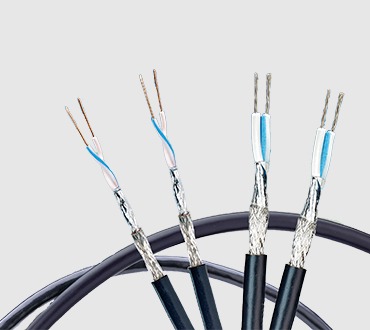
Single pair Ethernet cables only contain one twisted pair (single pair). Single twisted-pair cabling was first used in the 1870s, instead of having two straight wires next to each other, the conductors were twisted together to improve the electrical performance. The twisting of the conductors resulted in the cancellation of unwanted electrical noise from nearby pairs or other sources. In the 1870s, single twisted pair cabling was used to interconnect telephones.

Centuries later, the single twisted pair cabling is still in use. The use of this cable is now commonly found in building automation, industrial, and automotive applications. SPE offers additional advantages in comparison to the traditional cable. 

For example

1. Thinner bending radii 

2. Smaller cables. Saves material and costs. Great for weight and space-saving designs.

3. Transmission rates of up to 1Gbit on a single pair

4. SPE cable design enables much faster /easier installation, reducing errors in assembly

5. Single Pair Ethernet uses PoDL to supply terminal devices with up to 50W via the data line.

6. Lower caloric load, less smoke development 

SPE Power delivery

To enhance its usefulness, IEEE developed the ability to transmit power and data over the same twisted pair. Power transmission over 4-pair Ethernet cabling is commonly called Power over Ethernet (PoE). Power transmission for SPE IT cabling London is referred to as Power over Data Lines (PoDL). This standard specifies multiple classes of powered devices delivering between 0.5 and 52 watts of power. It’s important to realize, although PoDL technology is not compatible with the existing 2 and 4 pair POE equipment. It has the same advantages as PoE as it provides for centralized power control and backup power.

SPE Cables

Single Pair Ethernet cables are built to support a maximum frequency that corresponds with one or more IEEE applications. Additionally, there are also separate standards for patch cables and horizontal cables. Although it's possible to manufacture patch cords from horizontal cables, patch cables generally employ stranded conductors instead of solid ones. Thus, offering increased flexibility at the expense of diminished electrical performance over long lengths. 

SPE connectors

The interfaces discussed in the IEC 63171 standards for connector types 1-6 are open-sourced, allowing any manufacturer to make connectors with the interfaces. As a result, this will increase the likelihood of broad industry adoption. Manufacturers maintain the common interface; however, they have innovative freedom. They can implement proprietary features in other areas of the connector design. 

Original Source: What is Single Pair Ethernet (SPE) 

Tuesday, October 5, 2021

What is Data Cabling Used For?


What is Data Cabling?

Data cables are a crucial part of any IT infrastructure. Without data cables, you would be unable to transmit data between two points e.g. from a server to an individual PC. Accordingly, you need the right data cables for your specific needs to remain productive. But the world of data cables can be complex. There are many different categories available and understanding which one is best for you can be difficult. Getting to grips with data cables is important, so let’s look at how you can make the right choice. 


What Types of Data Cables Are There? 

There are three main types of data cables available: 

Twisted Pair: These data cables use a pair of twisted copper cores and are mostly found in telecommunications. The purpose of this twisted construction is to minimize any degradation to the signal. One of the twisted cores is used to transmit information while the other acts as a grounding wire. Typically, a Cat 6 cable – which uses the twisted pair design – can carry data over 100m without any signal degradation.

· Coaxial: Most commonly seen in older IT infrastructures, coaxial cables have high bandwidths and are capable of carrying high-frequency signals. These cables use a solid wire at their center as a conductor – which is within an insulator – and then an outer conductor is used to create a functioning circuit. This type of cable is popular in digital telephone networks due to the amount of data they can carry. 

Fibre Optic: One of the newer forms of data cabling, fibre optic cabling has brought revolutionary technology to network cabling London. Fibre optic cables use beams of light to transmit data and consist of an inner core and outer cladding. The cables are lightweight and capable of transmitting data over distances of up to 10km and at maximum speeds of 10 gigabits per second. Fibre optic cables are most used within telecommunications, cable TV, and local area networks.

A commonly asked question is whether ethernet cables are the same as data cables. The answer to this comes down to terminology. The term ethernet refers to a local area network rather than a specific cable. Any data cable used within such a network can technically be referred to as an ethernet cable. 

Data Cabling Installation

One of the best methods to adopt when it comes to data cabling is the structured cabling approach. This method uses patch panels and trunks to build an infrastructure whereby subsystems can be set up to support multiple hardware uses. Most importantly, structured cabling is scalable and makes future expansion much easier. These cabling systems can integrate twisted pair, coaxial, and fibre optic – although these different categories cannot directly connect with each other – and make it a versatile option.

The installation of data cabling Watford, whether it is structured or the more traditional point-to-point method, is a complex undertaking. Rather than taking this on yourself, it pays to bring in the services of a professional. Not only will they be able to deliver an installation that operates to a high standard, but the stress that they save you will be invaluable. 

Original Source: What is Data Cabling Used For?