Showing posts with label fibre optic cabling London. Show all posts

Wednesday, June 2, 2021

What are the VoIP Cabling Requirements When Installing a New Phone System?

 When planning for a new telephone system installation, the first consideration should be on the infrastructure. Therefore, what data cabling do I currently have, or what are the VoIP cabling requirements that I will need.

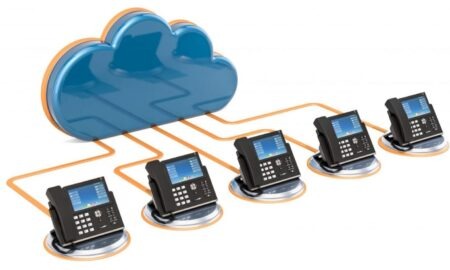
VoIP or Voice over Internet Protocol is simply the transmission of voice communication over a data network, such as the internet. 

With a new installation, this is straightforward. Thus, you can have a new cabling design and installation to suit the new VoIP phone system. However, with existing data cabling there can be confusion.

In this case, there may be existing cabling, but it’s not suitable for several reasons. 

1. The existing data cabling is a legacy phone cable (Such as BT) and not suitable for data transmission.

2. There is existing data cabling, but its quality of installation is not suitable for VoIP. (VoIP requires a quality of service)

3. There are not enough ports for the required telephones.

4. The structured cabling is not centralized and therefore unable to be controlled by the new phone switches. 

In brief, where these situations are present, a new data cabling installation or upgrade is required. 

What should I plan for VoIP cabling requirements? 

VoIP telephones require a data cable to each phone that originates from a data cabinet with access to a data switch. To this end, the telephone switch hardware is installed in the data cabinets throughout a building, and the phones can be wired to any switch as long as they are linked.

The data cabling can be any category of cabling from Cat5e to above. Cat5e and Cat6a are the standard choices for 1-gigabit transmission speeds. Furthermore, the 10-gigabit transmission starts with Cat6a and above. However, 1-gigabit is more than adequate for VoIP transmission.

The IT cabling Canary Wharf installation has to be at a professional level. VoIP requires a quality of service (QoS) to enable uninterrupted call quality. Indeed, unlike WiFi or PC data transmission, VoIP will result in poor quality or dropouts with poorly installed data cabling. With the PCs, it might just result in a slow loading or drop out of a hardly noticeable web page. However, with a phone, it can be an echo, buzzing, or loss of call. In short, all very frustrating and potentially costly if losing potential customers.

You may have existing cabling and not be sure if it's suitable for VoIP. 

Elements of a suitable data cabling installation for VoIP 

For the most part, the following elements should all be part of a cabling installation for VoIP.

A minimum of Cat5e with Cat6 and Cat6a preferred if scaling for higher speeds.

Installed with a well-known cabling brand

Many installations are undertaken with generic cheaper cabling systems, and these cause failure over time.

Installed onto Patch Panels inside a designated cabinet or set of cabinets

Avoid having the ends of cabling terminated onto plugs and plugged straight into switches. These fail over time

Terminated into designated outlet boxes

A dedicated cable for each telephone

Installed in correct containment and away from electrical cabling and interference

Electrical interference will cause noise and dropouts on the calls

Tested with a Fluke DSX or similar, and full test results supplied.

Without these, you will not know if the cabling is at the required standard and suitable for VoIP use.

The elements above should all be part of any data cabling installation. However, in many 

Evaluating existing structured cabling 

When you have existing data cabling Watford in place, there are similar checks you can put in place to check suitability. In this case, you would want to ensure the following

Check that there is enough cabling for each of your new phones.

Ensure that the existing cabling is Cat5e or above

Test your existing cabling with a Fluke DSX or similar 

The test results will show if the existing cabling passes to the required standard for all data transmission. With any failure, the cabling will need to be replaced to ensure good telephone performance.

Original Source: VoIP Cabling Requirements 

Wednesday, December 30, 2020

Structured Cabling Testing


Data Cabling Testing – The Basics

Data is one of the most important elements of modern business and its usage can be found in practically every sector. Accordingly, you need your data supply to be reliable; one of the best ways to achieve this is with high-quality data cabling in London. However, data cabling is not immune to faults. And this is why it’s crucial that it’s regularly tested. Carrying out data cabling testing allows you to identify potential problems and maintain the health of your data. Testing structured cabling systems may sound complex, but the reality is that it’s relatively straightforward.


Data Cabling Testing Standards

It’s important that your data cabling meets industry standards in order to guarantee that it works. A setup that does not meet these standards is likely to lead to poor data transfer and, in certain cases, data loss. Therefore, it’s critical that you team up with a professional who can advise on the current state of your structured cabling. The standards required for your particular premises can vary, but these requirements can be found in the ISO 11801 series of standards. Conforming to these data cabling testing standards is essential for a fully operational data system.

Cable Testing Procedures

Testing structured cabling systems involves significant work and complexities, but the basics are far from difficult to understand. Naturally, in order to carry out testing to a specific standard, you will need to carry out testing procedures with specialist equipment. And using this equipment requires training in order to complete testing accurately. The equipment and procedures involved will include:

Network Cable Tester: This handheld device is used to specifically check the eight connectors at the end of each cable. Once the test is completed you will know if the connectors are operating correctly without the risk of any shorts/breaks being present.

Multimeter: Using a multimeter allows the operator to test continuity between two connectors of a data cable. Whilst this is ne for continuity checks it will be unable to confirm any details about the performance of the cable.

Cable Certification Tester: A much more advanced piece of equipment than the previous two devices, a cable certification tester allows you to carry out more rigorous tests. It can, for example, measure the resistance of conductors, check the wiring of the cable core, and measure signal degradation from any interference. The cable certification tester is the only device that is qualified to deliver a Pass or Fail verdict after testing a data cable. 

Testing Documentation

The data from cable certification data can be downloaded and printed in the form of a certificate. This dated paperwork will confirm both the type of cable that has been tested and the tests that have been carried out. As long as the results from these tests meet data cabling in Watford regulations then the certificate will be approved with a ‘Pass’ declaration. Once this Pass approval has been achieved you can rest assured that your data cabling is t for purpose. Data cabling testing remains a complex procedure to carry out correctly and safely, so you need to make sure you have experience and expertise on your side. By employing a professional to carry out your testing you can guarantee that your cabling solutions remain hassle-free.

Original Source: Structured Cabling Testing 

Thursday, September 3, 2020

Voice and Data Cabling in Digital Communication


What is voice and data communication?

The modern business landscape demands innovation and that is exactly what digital communication provides. But it’s crucial that you have the correct data systems and upgrades in place. And, as we start returning to offices following Covid-19, we are going to rely on digital communications more than ever before. Therefore, it’s the perfect time to get to grips with voice and data cabling Westminster systems and plan for the future. 


The Importance of VoIP Systems

Voice over Internet Protocol (VoIP) has been one of the most important developments in digital communication systems. Traditionally, voice communications were transmitted along phone lines and through circuit-switched networks. But VoIP updates this model for the 21 century. By digitizing analog voice signals, VoIP is able to package these as digital ‘packets’ which can be transmitted over the internet. This transmission can be facilitated by both WiFi and mobile networks making it highly flexible in terms of usage. And, as all it requires is an internet connection, VoIP is significantly cheaper than hardware-heavy landline systems.

What is the difference between voice and data?

The major difference between voice and data traffic is that data stream packets generally do not have to arrive in sequence and can be re-sent if they are dropped. In voice, communication, the whole message must travel as one continuous package since it only makes sense in a contiguous stream. Communication is the key to success in business, but how can you enhance it? The answer lies within data cabling. These cables – which include Cat5, Cat6, and fibre – are used to transmit digital signals from point A to point B. It’s a simple concept, but one which can make a huge difference to the speed and quality of your communications. Modern developments in cabling have strengthened this even further with structured cabling, a network cabling London that supports multiple devices and minimizes complexity. Maintenance concerns are reduced and cost savings will soon mount up. These savings can then be invested in other areas of the business to foster further growth. 

Data Networks Changing Landscape

The business landscape, post-COVID-19, is going to look very different. For one thing, the need for social distance and reduce face-to-face meetings is going to radically change the way we communicate. These changes could manifest themselves in the form of telephone moves as you reposition workstations and installation of new power points. 

More importantly, however, is the impact of sta numbers. The economic hit of Covid-19 means that sta numbers are likely to fall in many businesses. But this will not be forever. Your business will, in time, start to experience growth. And, to take advantage of this growth and remain competitive, you need to respond quickly. That’s why refurbing your office now is the perfect opportunity to strengthen your future with scalability. As you take more people on, you will need to guarantee they can utilize world-class communications immediately to drive your business onwards. 

Voice & Data Final Thoughts

Digital communications provide the heartbeat of all businesses in the modern age. Accordingly, you need to ensure that your company embraces the services that are available. By installing VoIP systems and underpinning this with structured cabling you can get a head-start on your competition. Not only will this combination provide you with cutting edge communications, but it will also allow you to future proof your business. 

Original Source: Voice and Data Cabling in Digital Communication

Saturday, August 1, 2020

Advantages of Fibre Optic Cable

In the majority of structured cabling installations, there will always be a copper data cabling element. Furthermore, in the majority of installations, there will also be a fibre cabling requirements. In addition, there are cases where a choice needs to be made whether to install an element as fibre or copper. For example with backbones and links to elements further away from the nearest data switch. There are certain advantages of fibre optic cable that make it the preferred choice in certain situations


What is Fibre Optic Cable

Fibre cable is constructured of multiple strands of glass or plastic which are then cladded. Each cable contains multiple cores and always in even numbers for transmission and receiving. These cores are then wrapped in a protective casing. Finally the cables is completed with an outer jacket.

Transmission down the cable is via pulses of light. These are converted from electricity are either end by media converters. Thus they differ from copper cables in that copper using electricity only to send signals. A further article comparing copper and fibre cables can be found HERE

What are the types of Fibre Optic Cables

Fibre optic cabling London are designated as either
1.        Singlemode Fibre
2.        Multimode Fibre

 The cable types are then further categorised as
Singlemode – OS1, OS2
Multimode – OM1, OM2, OM3, OM4, OM5
The different categories signify the transmission capabilities of the cables. Thus as technology designs a newer, faster and better cable type it is rati ed to a certain standard and therefore given a category.

8 Advantages of Fibre Optic Cable

The following are some of the advantages of fibre optic cable

1/ Ability for Longer Distances

Copper cables have a regulation limit of 100m for transmission. Multi mode cables can transmit the same speeds over several hundred metres and singlemode over several kilometres. Therefore in situations where connectivity is required over long distances fibre cable is the cable of choice

2/ Faster Speeds

Due to having cores that use light for transmission, fibre cables are able to transmit data art much faster speeds than their copper equivalent. There is also less loss and corruption to the transmission.

3/ Less interference from outside elements

Copper cables have the disadvantage that signals from other cables and outside influences such as power cables, lights, and noise corrupt their signal. This results in lost signal and data. However, as fibre uses light for transmission it doesn’t have the same problem of interference as light isn’t influenced by these factors

4/ Increased Bandwidth

In a like for like size of cable, the ber cable will carry a greater bandwidth compared to the copper equivalent. Furthermore, singlemode will have twice the throughput of multimode cables

5/ Smaller cable size

The actual cores of the fiber cables are small and the majority of the cable size is due to the protective sheath and coating. Therefore as core sizes increase the cable doesn’t increase din overall size as much. For example the difference in size between a 4 core and 8 c ore ber cable is far from double the size. However with copper cables you need 1 cable per link so it's always double the size.

For example for a 24 way link you would need 24 copper cables or one single 48 core ber. Furthermore the 48 core ber cable would be the same size as one Cat6a cable

6/ Sturdier cable construction.

The fibre cable is wrapped in a Kevlar coating. Although the inner cores are very fragile the overall cable is very strong. It is able to be installed and takes alot more to damage it than a copper cable. Any slight damage to a copper cable usually renders it unsuitable for use.

7/ Scalability for future technology.

As with all technology there is a shelf life where certain fibre cable categories are not suitable for certain applications. However their suitability lasts a lot longer than copper equivalents. As fibre components have changed (i.e the termination type) there has always been a simple solution such as a bespoke patch lead to change the connection from panel to switch. Furthermore as technology grows the newer media converters are able to send more information down existing fibre.

8/ Future cost savings

As previously mentioned optical cables don’t increase in size much as there cores increase. Therefore neither does the cost. Thus doubling the core size doesn’t double the cost of data cabling Westminster as it would with copper.

In this instance future considerations can be installed during initial project times and be in place. For example 8 cores are only currently required but a 24 core cable is installed to allow for future growth. The cost increase is small compared to it almost tripling with copper links.

Tuesday, June 2, 2020

Mobile Boosters in the UK. Are they legal?

One of the common questions we get asked is are Mobile Boosters Legal in the UK?

The confusion is because for some time mobile boosters were illegal to install and use in the UK. However these rules and guidelines have changed in the past 2 years to make mobile boosters legal in the UK

In April 2018 the Wireless Telegraphy (Mobile Repeater) (Exemption) Regulations 2018 came into act which outlines to legal use of mobile repeaters.


The regulations were focused on two areas of installation


1.        Static Boosters for indoor applications
2.        Boosters used within motor vehicles
“The first are known as static mobile phone repeaters. These are for indoor use, and are designed to improve coverage inside peoples’ homes, offices and other buildings. They must not be used in other situations. For example, while in motion, such as in a vehicle.

The ‘downlink’ from these repeaters (the part that connects the repeater to the mobile phone) must not be used outside or in semi-open locations. It must be used inside a building which has a ceiling or a roof.

The ‘uplink’ (the part that connects the repeaters to the mobile phone network) can be used either indoors or outdoors.

This type of repeater may not be helpful in all situations. However, they can help to boost indoor signals in situations where there is reasonable mobile coverage just outside the building, but indoor coverage is not good enough.

We have restricted these types of repeaters so they amplify the signal from only one mobile phone network at a time. However they may be re- configured to a different network”

The important clarification from these Ofcom regulations is that the system is only allowed and designed to amplify the mobile phone signal from ONE mobile phone network at one time.

In addition to this the mobile booster system must be adhere to the following.


  • No other networks must be interfered with by the booster
  • The boosters are adhere with the license conditions of the mobile network operator and that they can control them to turn them on or o or to con gure them

The system can be reconfigured to a different network provider but can only broadcast a single provider at any one time

The system must also be able to boost 2G, 3G and 4G at all times and therefore 4g only mobile may not and are probably not conforming Mobile repeaters that boost more than one operator at a time do not comply with Ofcom rules and regulations.

Do mobile repeaters work?


It is important to remember that mobile repeaters are exactly that, they repeat the signal they receive at its external antenna. They take that signal and then repeat it to other areas of the building

Therefore if you have good mobile coverage external to your building, the installation of an external mobile antenna will receive that signal. Then this follows with the installation of network cabling London and internal mobile repeater access points. This results in you will achieving total mobile coverage within your building

Licence exempt mobile phone repeaters

The range of mobile repeaters we install all comply with the Ofcom regulations and the requirements of the mobile phone providers.

Solutions will vary on the location, size of building and coverage requirements. However in all cases there is a solution that we can recommended, design and install for you.

The whole solution from the external aerial, through to the internal repeaters are part of the installation. In addition the associated data cabling London and power requirements complete the work

Thursday, May 7, 2020

Data Cabling Surveys During COVID-10 Lockdown

How can I get a data cabling survey done now that there is a lockdown?

With the new guidelines on social distancing and the message to stay at home, structured cabling surveys are becoming increasingly di cult or not possible to carry out in person.


However this time shall pass and those projects that need to be completed will still need to be undertaken. A delay in survey will lead to lag in quotation, approval and the project being mobilized and undertaken.
The aim now is to reduce that time lag by still carrying out the earlier part of the process using innovative techniques and systems to complete these surveys and quotations allowing clients to put these budgets into their cash ow so when social distancing is reduced these works can happen immediately.

How can surveys be completed without coming to my place of business?


The majority of surveys can still be undertaken “o site” and the more information that can be collated during this process the more accurate the quotation will be for the needs of the client.

The majority of the information doesn’t change whether it’s a meeting on-site or an o -site discussion. The numbers of cables required, the number of users moving into a building, the requirement of the data cabling (Cat5e, Cat6, etc), the timescales to complete these works.

Also, the construction of the space can easily be communicated which with the knowledge of the project management team accurate quotations can be built. For example, does space have a false ceiling, a false floor, is there dado trunking around the walls of the offices, how long and wide is space, and where is the data cabinet in relation to those requirements?

Drawings allow the process to be even more accurate and will show our quotation team a visual of the space to gauge distances, routes, and requirements.

The final element which then allows a 99% accurate quotation is the provision of photos and videos. With the information above and photos or videos of the proposed requirements, our team is con dent that the quotation provided o site will be as accurate as an on-site survey.
If someone is still based at their offices or place of business a simple walk through the building with Facetime, team to provide the quotations you need.

What project surveys and quotations can be undertaken off-site?

The majority of projects can be quoted accurately o site and are especially suited to the following due to the similar nature of the spaces:

1.        Offices
2.        Warehouses
3.        Data Cabinet tidy ups and re-patching
4.        Audio Visual Installations and Video Conferencing
5.        Schools
6.        New office space where estimates are required (moving to new offices)
7.        Data Centres


What project surveys and quotations are not suitable be undertaken o site?

The following projects usually involve some deeper understanding of the requirements and survey of the spaces and even though these projects are not best suited to o -site surveys than can still be quoted with a quotation range as a budget which can then be confirmed with an on-site meeting once the opportunity arises.

1.        Listed building and building with restricted data cabling routes/drilling

Due to the complicated routes and limitations on what can be changed, drilled, and have containment fixed, an on-site survey is usually best for these buildings.

2.        Residential Homes

Homes by their nature have no obvious routes for data cabling Watford so seeing the building internally from the start to the endpoint is important. These projects are best suited to an on-site presence.

3.        External data cabling and fiber optic links between buildings.

Using technology such as Google earth can assist in providing quotations for these works but in a population-dense area such as London the routes externally between buildings or spaces sometimes follow many changes of direction and elevation which cannot be seen or understood o site.

The advantages of Projects during social distancing

With the ability to still provide quotations during the social distancing stage we can then follow through with structured cabling installations during the shutdown of many offices, schools, and places of business.

The advantages are that the work can be completed win a much safer way as the premises are empty, the works can be completed in regular hours rather than incurring an out of hours installation cost and in some cases the works can be completed quicker and more economical as the absence of employees in the space allow the works to be completed faster.

Accuracy and Guarantee


The more information that is able to be communicated the more accurate the quotation can be for the client. However in 20 years of pricing so many different projects, we know from experience that over 95% of projects we have quoted in the past from o -site information have resulted in no changes to the price, once an onsite meeting has followed to rm up requirements, and of the 5% that have had the change the price hasn’t deviated by more than 10%, once further information was known.

Therefore, during these challenging times if we provide an o -site data cabling Westminster quotation for you based on the information received during a conference call and with the required supporting information we will honor that set price if the on-site follow up doesn’t change the pricing by more than 10%. In essence, it allows the cost to increase by 10% and we will still complete the works at the originally supplied quotation

For those quotations that can’t be accurately quoted a range of budget pricing can be supplied and firmed up on-site once the situation allows to still enable the clients to budget in their cash flow.