Thursday, September 3, 2020

Voice and Data Cabling in Digital Communication


What is voice and data communication?

The modern business landscape demands innovation and that is exactly what digital communication provides. But it’s crucial that you have the correct data systems and upgrades in place. And, as we start returning to offices following Covid-19, we are going to rely on digital communications more than ever before. Therefore, it’s the perfect time to get to grips with voice and data cabling Westminster systems and plan for the future. 


The Importance of VoIP Systems

Voice over Internet Protocol (VoIP) has been one of the most important developments in digital communication systems. Traditionally, voice communications were transmitted along phone lines and through circuit-switched networks. But VoIP updates this model for the 21 century. By digitizing analog voice signals, VoIP is able to package these as digital ‘packets’ which can be transmitted over the internet. This transmission can be facilitated by both WiFi and mobile networks making it highly flexible in terms of usage. And, as all it requires is an internet connection, VoIP is significantly cheaper than hardware-heavy landline systems.

What is the difference between voice and data?

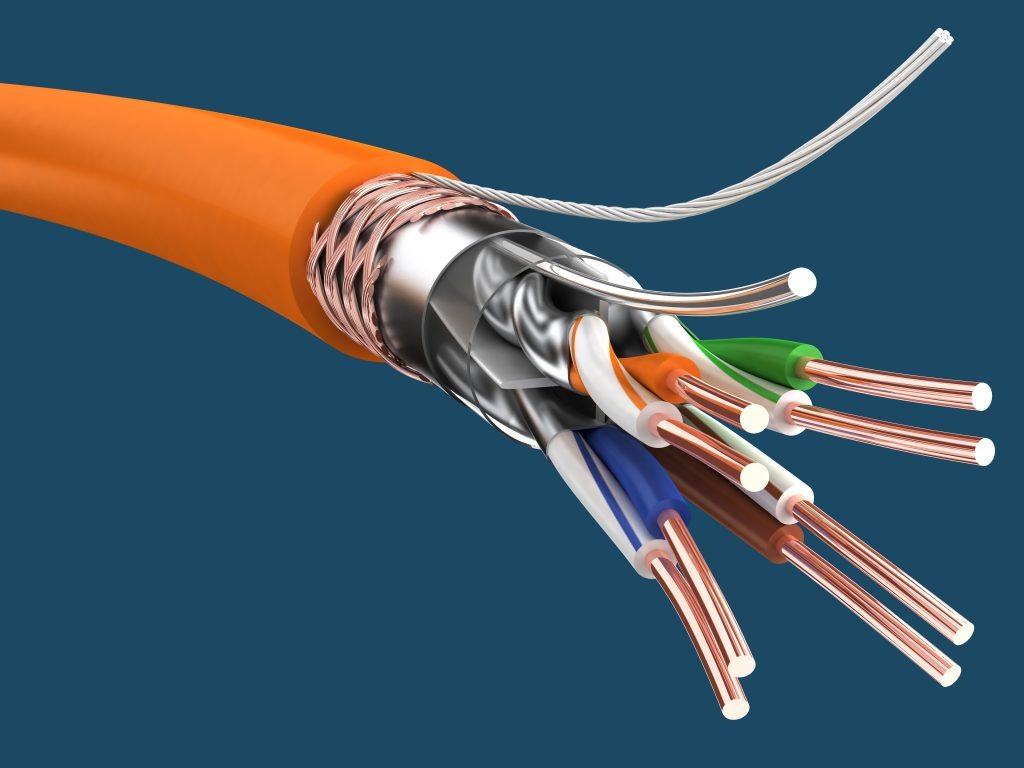
The major difference between voice and data traffic is that data stream packets generally do not have to arrive in sequence and can be re-sent if they are dropped. In voice, communication, the whole message must travel as one continuous package since it only makes sense in a contiguous stream. Communication is the key to success in business, but how can you enhance it? The answer lies within data cabling. These cables – which include Cat5, Cat6, and fibre – are used to transmit digital signals from point A to point B. It’s a simple concept, but one which can make a huge difference to the speed and quality of your communications. Modern developments in cabling have strengthened this even further with structured cabling, a network cabling London that supports multiple devices and minimizes complexity. Maintenance concerns are reduced and cost savings will soon mount up. These savings can then be invested in other areas of the business to foster further growth. 

Data Networks Changing Landscape

The business landscape, post-COVID-19, is going to look very different. For one thing, the need for social distance and reduce face-to-face meetings is going to radically change the way we communicate. These changes could manifest themselves in the form of telephone moves as you reposition workstations and installation of new power points. 

More importantly, however, is the impact of sta numbers. The economic hit of Covid-19 means that sta numbers are likely to fall in many businesses. But this will not be forever. Your business will, in time, start to experience growth. And, to take advantage of this growth and remain competitive, you need to respond quickly. That’s why refurbing your office now is the perfect opportunity to strengthen your future with scalability. As you take more people on, you will need to guarantee they can utilize world-class communications immediately to drive your business onwards. 

Voice & Data Final Thoughts

Digital communications provide the heartbeat of all businesses in the modern age. Accordingly, you need to ensure that your company embraces the services that are available. By installing VoIP systems and underpinning this with structured cabling you can get a head-start on your competition. Not only will this combination provide you with cutting edge communications, but it will also allow you to future proof your business. 

Original Source: Voice and Data Cabling in Digital Communication

Saturday, August 1, 2020

Advantages of Fibre Optic Cable

In the majority of structured cabling installations, there will always be a copper data cabling element. Furthermore, in the majority of installations, there will also be a fibre cabling requirements. In addition, there are cases where a choice needs to be made whether to install an element as fibre or copper. For example with backbones and links to elements further away from the nearest data switch. There are certain advantages of fibre optic cable that make it the preferred choice in certain situations


What is Fibre Optic Cable

Fibre cable is constructured of multiple strands of glass or plastic which are then cladded. Each cable contains multiple cores and always in even numbers for transmission and receiving. These cores are then wrapped in a protective casing. Finally the cables is completed with an outer jacket.

Transmission down the cable is via pulses of light. These are converted from electricity are either end by media converters. Thus they differ from copper cables in that copper using electricity only to send signals. A further article comparing copper and fibre cables can be found HERE

What are the types of Fibre Optic Cables

Fibre optic cabling London are designated as either
1.        Singlemode Fibre
2.        Multimode Fibre

 The cable types are then further categorised as
Singlemode – OS1, OS2
Multimode – OM1, OM2, OM3, OM4, OM5
The different categories signify the transmission capabilities of the cables. Thus as technology designs a newer, faster and better cable type it is rati ed to a certain standard and therefore given a category.

8 Advantages of Fibre Optic Cable

The following are some of the advantages of fibre optic cable

1/ Ability for Longer Distances

Copper cables have a regulation limit of 100m for transmission. Multi mode cables can transmit the same speeds over several hundred metres and singlemode over several kilometres. Therefore in situations where connectivity is required over long distances fibre cable is the cable of choice

2/ Faster Speeds

Due to having cores that use light for transmission, fibre cables are able to transmit data art much faster speeds than their copper equivalent. There is also less loss and corruption to the transmission.

3/ Less interference from outside elements

Copper cables have the disadvantage that signals from other cables and outside influences such as power cables, lights, and noise corrupt their signal. This results in lost signal and data. However, as fibre uses light for transmission it doesn’t have the same problem of interference as light isn’t influenced by these factors

4/ Increased Bandwidth

In a like for like size of cable, the ber cable will carry a greater bandwidth compared to the copper equivalent. Furthermore, singlemode will have twice the throughput of multimode cables

5/ Smaller cable size

The actual cores of the fiber cables are small and the majority of the cable size is due to the protective sheath and coating. Therefore as core sizes increase the cable doesn’t increase din overall size as much. For example the difference in size between a 4 core and 8 c ore ber cable is far from double the size. However with copper cables you need 1 cable per link so it's always double the size.

For example for a 24 way link you would need 24 copper cables or one single 48 core ber. Furthermore the 48 core ber cable would be the same size as one Cat6a cable

6/ Sturdier cable construction.

The fibre cable is wrapped in a Kevlar coating. Although the inner cores are very fragile the overall cable is very strong. It is able to be installed and takes alot more to damage it than a copper cable. Any slight damage to a copper cable usually renders it unsuitable for use.

7/ Scalability for future technology.

As with all technology there is a shelf life where certain fibre cable categories are not suitable for certain applications. However their suitability lasts a lot longer than copper equivalents. As fibre components have changed (i.e the termination type) there has always been a simple solution such as a bespoke patch lead to change the connection from panel to switch. Furthermore as technology grows the newer media converters are able to send more information down existing fibre.

8/ Future cost savings

As previously mentioned optical cables don’t increase in size much as there cores increase. Therefore neither does the cost. Thus doubling the core size doesn’t double the cost of data cabling Westminster as it would with copper.

In this instance future considerations can be installed during initial project times and be in place. For example 8 cores are only currently required but a 24 core cable is installed to allow for future growth. The cost increase is small compared to it almost tripling with copper links.

Tuesday, June 30, 2020

Data Cabling and Electrical Installations for Social Distancing at Work

With the return to work starting to slowly start the requirement need to change. However to ensure social distancing  the current desk layouts   for sta are safe is a major consideration. Thus Facilities Managers and IT Managers will need to relocate desks, people and therefore the data cabling and electrical outlets

Social distancing on a greater level with entry and exit into the building and movement throughout the premise is a discussion outside of this article. This is to focus on what options there are for arranging your desks or sta at those desks and what will need to be changed to accommodate it.


Social Distancing at the Desk

Guidelines are yet to firmly put in place but the following have been communicated as a consideration for working on a desk layout.
  • Ensuring a 2 metre distance while sitting side to side
1. This may mean employees sitting at every other desk
  • Avoiding sta sitting opposite one another
1. This results in avoiding back to back desks
  • Install plastic screens between desks as a protection shield
  • Eliminating hot desk usage


Other Desk Options

Several of our clients have had us undertake surveys where the current island desk layouts are to be moved. Consequently all desk layouts are now facing the outer wall. Furthermore no 2 members of sta are alongside one another or next to each other.

Social Distancing effect on Power and Data outlets

In the above example the island desks were served by oor boxes containing electrical sockets and Cat6 data outlets.

The new layout designed allowed for installing new electrical and data cabling to the outside wall. Thus the desks could use them directly from the wall with no trailing leads. By installing new data cabling Watford and power the old floor boxes could be maintained. Thus allowing for the relocation back to them once social distancing safety measures could be reduced or eliminated.

Data Cabling and Electrical Considerations when using existing desk layouts with fewer people

In the scenario where existing desk layouts are maintained but employees are scattered among those desks the following considerations will need to be thought of.

Will the new seating position have enough power and data?


In an office that is fully staffed and a reduced work force is coming back to the office the desks will probably have enough power and data for the employee requirements.

However when moving staff to other desks areas, especially those that were previously rarely used there may be a lack of power and data. Thus additional outlets will need to be installed. Even if it is present does the data cabling need patching in correctly. In addition do the power extension blocks need to be installed.

Changing hot desks for permanent use


A large proportion of modern offices set aside desk space for hot desk use. The guidance is to eliminate hot desks due to the increased use of the space by multiple different employees rather than fixed employees

These hot desk areas may now to be used for permanent sta to spread them out. Some hot desk areas are wired for data cabling and electrical the same as a standard desks. Others will have minimal power and no data as they only reply on Wi-Fi.

In these instances new power and data will possibly need to be installed, and data cabling patch leads and electrical extension leads installed also.

Using other areas for new desk arrangements


To separate desks others usually use as desk areas are now being used to locate desks and seat staff. The following areas have been found to be used on recent surveys.

  • Training rooms
  • Conference / meeting rooms
  • Social / canteen areas where these are now closed

In each of the above cases desks will need to be relocated and new power and data cabling (even if temporary) will need to be installed

Upgraded Wi-Fi

One consideration as desks are moved and installed into temporary spaces is that the areas used may not have sufficient Wi-Fi coverage. It may lack coverage for the number of devices now situated in those areas. Where areas are now more densely used for technology additional structured IT cabling Canary Wharf for Wi-Fi may be required.

Those employees working from home and are phased back into the workspace may also now be using a laptop. As this travels between work and home it may require the use of upgraded Wi-Fi.

Surveys for New Social Distancing Layouts

Surveys are safe to conduct where social distancing can be maintained for both the client and our project management team. However to reduce commuting and travel where possible the majority of surveys and quotations can be undertaken remotely. Generally these can be undertaken with layout drawings and photos of the layout.


Tuesday, June 2, 2020

Mobile Boosters in the UK. Are they legal?

One of the common questions we get asked is are Mobile Boosters Legal in the UK?

The confusion is because for some time mobile boosters were illegal to install and use in the UK. However these rules and guidelines have changed in the past 2 years to make mobile boosters legal in the UK

In April 2018 the Wireless Telegraphy (Mobile Repeater) (Exemption) Regulations 2018 came into act which outlines to legal use of mobile repeaters.


The regulations were focused on two areas of installation


1.        Static Boosters for indoor applications
2.        Boosters used within motor vehicles
“The first are known as static mobile phone repeaters. These are for indoor use, and are designed to improve coverage inside peoples’ homes, offices and other buildings. They must not be used in other situations. For example, while in motion, such as in a vehicle.

The ‘downlink’ from these repeaters (the part that connects the repeater to the mobile phone) must not be used outside or in semi-open locations. It must be used inside a building which has a ceiling or a roof.

The ‘uplink’ (the part that connects the repeaters to the mobile phone network) can be used either indoors or outdoors.

This type of repeater may not be helpful in all situations. However, they can help to boost indoor signals in situations where there is reasonable mobile coverage just outside the building, but indoor coverage is not good enough.

We have restricted these types of repeaters so they amplify the signal from only one mobile phone network at a time. However they may be re- configured to a different network”

The important clarification from these Ofcom regulations is that the system is only allowed and designed to amplify the mobile phone signal from ONE mobile phone network at one time.

In addition to this the mobile booster system must be adhere to the following.


  • No other networks must be interfered with by the booster
  • The boosters are adhere with the license conditions of the mobile network operator and that they can control them to turn them on or o or to con gure them

The system can be reconfigured to a different network provider but can only broadcast a single provider at any one time

The system must also be able to boost 2G, 3G and 4G at all times and therefore 4g only mobile may not and are probably not conforming Mobile repeaters that boost more than one operator at a time do not comply with Ofcom rules and regulations.

Do mobile repeaters work?


It is important to remember that mobile repeaters are exactly that, they repeat the signal they receive at its external antenna. They take that signal and then repeat it to other areas of the building

Therefore if you have good mobile coverage external to your building, the installation of an external mobile antenna will receive that signal. Then this follows with the installation of network cabling London and internal mobile repeater access points. This results in you will achieving total mobile coverage within your building

Licence exempt mobile phone repeaters

The range of mobile repeaters we install all comply with the Ofcom regulations and the requirements of the mobile phone providers.

Solutions will vary on the location, size of building and coverage requirements. However in all cases there is a solution that we can recommended, design and install for you.

The whole solution from the external aerial, through to the internal repeaters are part of the installation. In addition the associated data cabling London and power requirements complete the work

Thursday, May 7, 2020

Data Cabling Surveys During COVID-10 Lockdown

How can I get a data cabling survey done now that there is a lockdown?

With the new guidelines on social distancing and the message to stay at home, structured cabling surveys are becoming increasingly di cult or not possible to carry out in person.


However this time shall pass and those projects that need to be completed will still need to be undertaken. A delay in survey will lead to lag in quotation, approval and the project being mobilized and undertaken.
The aim now is to reduce that time lag by still carrying out the earlier part of the process using innovative techniques and systems to complete these surveys and quotations allowing clients to put these budgets into their cash ow so when social distancing is reduced these works can happen immediately.

How can surveys be completed without coming to my place of business?


The majority of surveys can still be undertaken “o site” and the more information that can be collated during this process the more accurate the quotation will be for the needs of the client.

The majority of the information doesn’t change whether it’s a meeting on-site or an o -site discussion. The numbers of cables required, the number of users moving into a building, the requirement of the data cabling (Cat5e, Cat6, etc), the timescales to complete these works.

Also, the construction of the space can easily be communicated which with the knowledge of the project management team accurate quotations can be built. For example, does space have a false ceiling, a false floor, is there dado trunking around the walls of the offices, how long and wide is space, and where is the data cabinet in relation to those requirements?

Drawings allow the process to be even more accurate and will show our quotation team a visual of the space to gauge distances, routes, and requirements.

The final element which then allows a 99% accurate quotation is the provision of photos and videos. With the information above and photos or videos of the proposed requirements, our team is con dent that the quotation provided o site will be as accurate as an on-site survey.
If someone is still based at their offices or place of business a simple walk through the building with Facetime, team to provide the quotations you need.

What project surveys and quotations can be undertaken off-site?

The majority of projects can be quoted accurately o site and are especially suited to the following due to the similar nature of the spaces:

1.        Offices
2.        Warehouses
3.        Data Cabinet tidy ups and re-patching
4.        Audio Visual Installations and Video Conferencing
5.        Schools
6.        New office space where estimates are required (moving to new offices)
7.        Data Centres


What project surveys and quotations are not suitable be undertaken o site?

The following projects usually involve some deeper understanding of the requirements and survey of the spaces and even though these projects are not best suited to o -site surveys than can still be quoted with a quotation range as a budget which can then be confirmed with an on-site meeting once the opportunity arises.

1.        Listed building and building with restricted data cabling routes/drilling

Due to the complicated routes and limitations on what can be changed, drilled, and have containment fixed, an on-site survey is usually best for these buildings.

2.        Residential Homes

Homes by their nature have no obvious routes for data cabling Watford so seeing the building internally from the start to the endpoint is important. These projects are best suited to an on-site presence.

3.        External data cabling and fiber optic links between buildings.

Using technology such as Google earth can assist in providing quotations for these works but in a population-dense area such as London the routes externally between buildings or spaces sometimes follow many changes of direction and elevation which cannot be seen or understood o site.

The advantages of Projects during social distancing

With the ability to still provide quotations during the social distancing stage we can then follow through with structured cabling installations during the shutdown of many offices, schools, and places of business.

The advantages are that the work can be completed win a much safer way as the premises are empty, the works can be completed in regular hours rather than incurring an out of hours installation cost and in some cases the works can be completed quicker and more economical as the absence of employees in the space allow the works to be completed faster.

Accuracy and Guarantee


The more information that is able to be communicated the more accurate the quotation can be for the client. However in 20 years of pricing so many different projects, we know from experience that over 95% of projects we have quoted in the past from o -site information have resulted in no changes to the price, once an onsite meeting has followed to rm up requirements, and of the 5% that have had the change the price hasn’t deviated by more than 10%, once further information was known.

Therefore, during these challenging times if we provide an o -site data cabling Westminster quotation for you based on the information received during a conference call and with the required supporting information we will honor that set price if the on-site follow up doesn’t change the pricing by more than 10%. In essence, it allows the cost to increase by 10% and we will still complete the works at the originally supplied quotation

For those quotations that can’t be accurately quoted a range of budget pricing can be supplied and firmed up on-site once the situation allows to still enable the clients to budget in their cash flow.

Wednesday, March 11, 2020

Electrical Installations in the Information Age

In the increasingly data driven world that we live, it is easy to get carried away thinking about the significance of data cabling Watford when planning your office move or upgrade. But with this increased reliance on information technology, it is vital that we don’t overlook more the traditional cabling and electrical installations that are required. Because ultimately, everything needs power.

Planning For Electrical Installations


There are several things that you should keep in mind when planning Electrical Installations for IT, data cabling and power outlets for your project, including:

  • Overestimate capacity – The number of plug points that we need has exploded in recent years as we’ve become attached to such a plethora of electronic devices, like mobile phones, laptops, tablets, digital cameras. It is better and easier to plan for multiple access points, rather than having employees annoyed, or using extension leads which can be dangerous.
  • Allow flexibility – The way that people work is changing and often people won’t spend their whole day sat at a desk, but instead use meeting rooms or break out areas. Employees will still have a need for power sockets in these areas, so it is important that you anticipate this and put extra sockets where they may be required.
  • Consider specialist requirements – Some parts of the electrical installation may have very specialist requirements that are different from the rest of the build. This is particularly application to areas like comms rooms that have a very high density of high powered computing equipment. Consider the power needs for these spaces, but also any additional safety measures that may need to be put in place.
  • Think ahead – Electrical Installations for IT – Modern businesses need to be far more flexible and adaptable that they ever where in the past, and this applies to their office space as well. Using methods such as floor box electrical installations with false floors will make it much easier should you need to reconfigure the space in the future.


Back Up Power Installations


Another often overlooked but vitally important area is back up power supplies. For digital businesses that rely on being online to generate revenue, power cuts can be extremely costly. Take proper measures, such installing UPS systems to ensure that you keep your servers running even when the power fails.
Once you reach a certain scale it would also be worth considering installing a generator, which could keep your business operational even during longer power outages.


Safety and Standards


It goes without saying that for all electrical installations for IT, safety is of the utmost importance, and proper guidelines should be followed in terms of both the implementation and the materials used.
There are various standards that much be met to ensure the safety of electrical installations, such as the British Standard “Requirements for Electrical Installations. IET Wiring Regulations” or BS 7671. In accordance with this, all works should completed by properly accredited experts.
Safety considerations should continue well after the initial installation, with regular PAT testing of electrical equipment and periodic reviews of electrical wiring. This is particularly important in high use areas such as offices that will receive a lot of wear and tear.
For more information on guidance on electrical installations you are considering, don’t hesitate to get in touch and speak to one of our expert engineers.